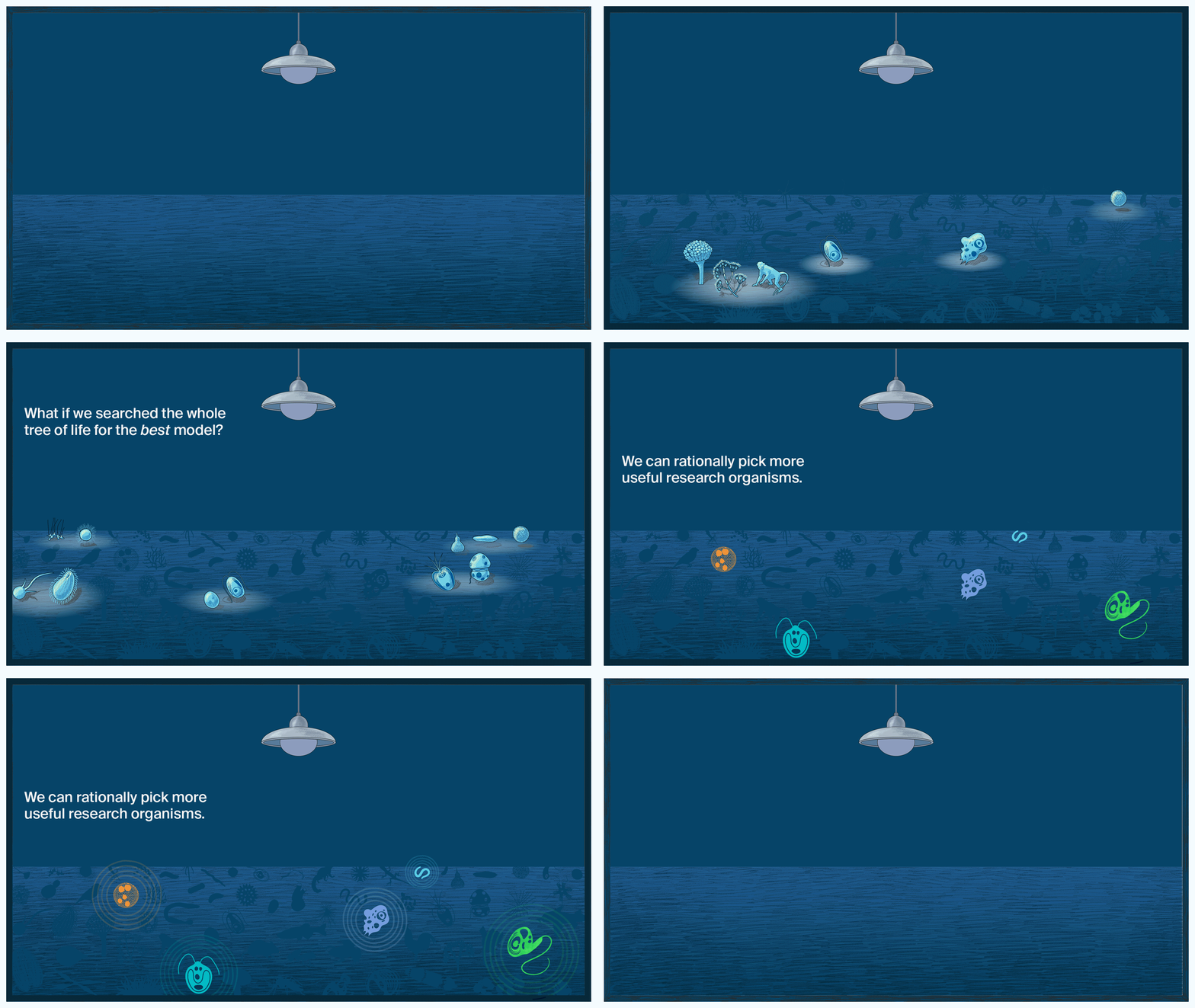
Traditional “supermodel” organisms have helped us study human biology.
But no organismal model is perfect — different aspects of human biology require different or multiple models. We developed an approach to predict which organisms could best model your human gene of interest.
What if we could use data to select model organisms based on relevance to your specific gene of interest?
Our approach:
- We identified 62 experimentally tractable organisms across the eukaryotic tree of life and compared proteins in these organisms to human proteins.
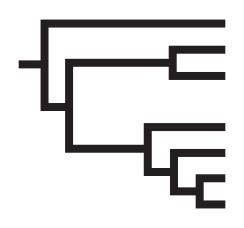
- By taking into account both protein structural characteristics and phylogenetic distance, we identified organisms with proteins unexpectedly similar to humans.


molecular weight
aromaticity
instability index
flexibility
grand average of hydrophobicity
isoelectric point
charge at PH 7
helix fraction
sheet fraction
molar extinction coefficient of cysteines
molecular weight
aromaticity
instability index
flexibility
grand average of hydrophobicity
isoelectric point
charge at PH 7
helix fraction
sheet fraction
molar extinction coefficient of cysteines
Our results surprised us.
For example, zebrafish, algae, and paramecium are good models in many instances, despite their distance from humans.


Understand our perspective
IDEA
14 DEC 2024
A data-driven approach to match organisms and research problems
READ PUB
Read about our methods
RESULT
14 DEC 2024
Leveraging evolution to identify novel organismal models of human biology
READ PUB
We've followed up with experimental testing.
We started testing our hypotheses by modeling human genetic diseases in algae and worms.

Start searching
We're releasing our analyses through this web portal for scientists to explore. How might these data apply to your work?

Get involved
We'd love to hear your perspectives and feedback on organism selection and our web portal.